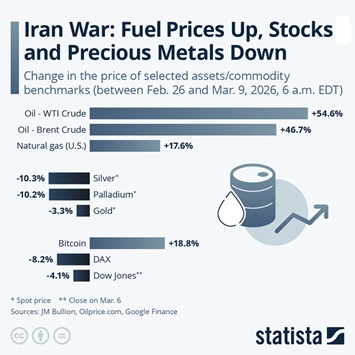
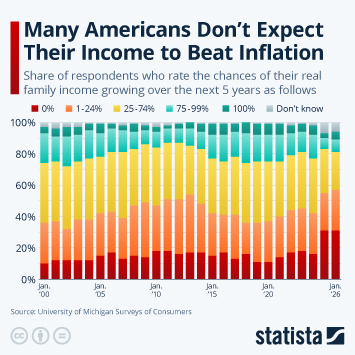
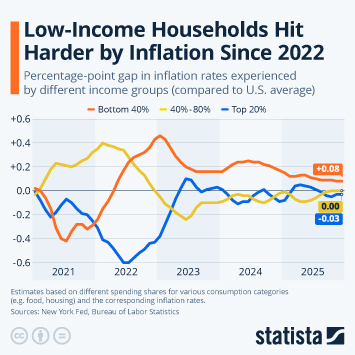
Inflation has become an increasingly common concern around the world. While sensitivity around the issue is staying elevated among consumers in a majority of countries surveyed by Statista Consumer Insights, worry about inflation is now lower than it was in 2022, the year of the Russian invasion of Ukraine. Inflation already started to rise around the world in 2021 due to pandemic-era supply disruptions and culminated in the 2022 energy crisis due to the war in Ukraine. But in following years, inflation pressures continued to arise in the form of U.S. tariffs, tight labor markets and most recently the war in Iran.
While in 2022, 63 percent of respondent in the United Kingdom, 54 percent of German respondents, 53 percent of those in the U.S. and 52 percent in Italy all ranked inflation among the major issues in their country, these numbers were down to around 44-54 percent by 2025. However, this still constitutes a significant increase over 2020, when only between 27 percent and 35 percent of respondents in these countries were majorly concerned about inflation.
But this pattern doesn't apply to all countries. Some developing nations that were plagued by inflation crises before, like Argentina, Brazil or Nigeria, are actually less worried in the current environment (and were less concerned in 2022) than they had been previously. Conversely, nations long shielded from inflation, like Japan, are now much more worried than they were five years ago. Inflation worry has meanwhile not quieted down in Australia and continued to rise beyond 2022 to a whopping 61 percent of respondents most recently. Nations less touched by inflation include India and China, which decided to profit off the global energy crisis of 2022 by buying sanctioned Russian oil at discounted prices.