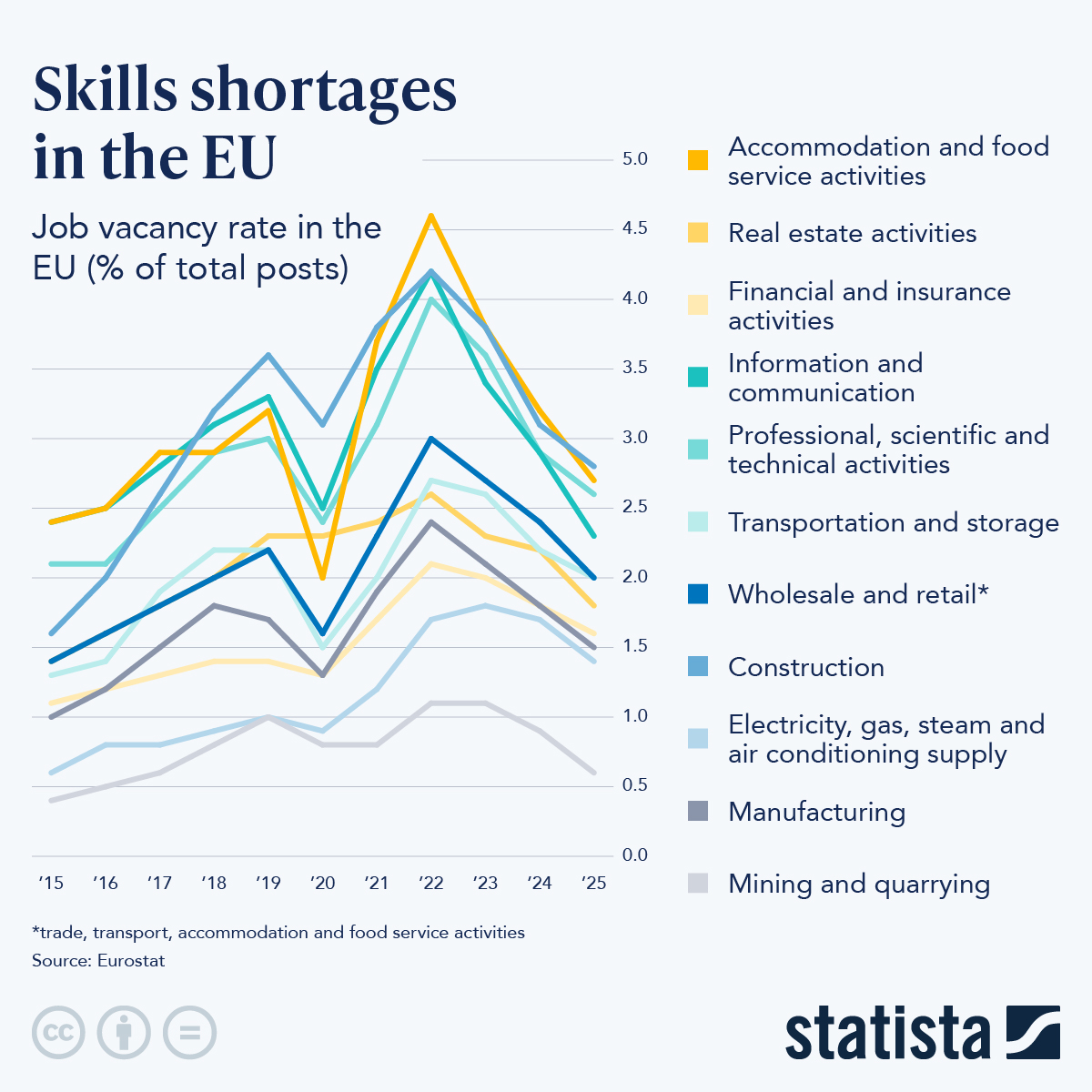
Across all European Member States and irrespective of industries, skills shortages are among the most persistent constraints on growth, productivity, and competitiveness. Employers across sectors increasingly report difficulties in finding workers with the right mix of technical, digital, and job-ready skills, even as overall employment remains high.
In fact, according to the European Commission, more than two-thirds of medium-sized EU companies identify labour and skills shortages as a major obstacle to investment, making it one of the most frequently cited barriers to business expansion across the single market. These shortages are not evenly distributed: they tend to hit service-intensive, SME heavy sectors first, where margins are thinner and access to structured training is more limited.
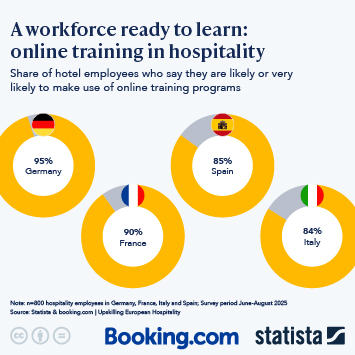
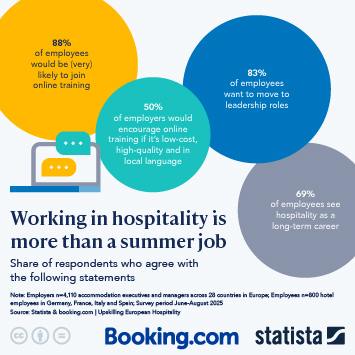
This shortage affects both ends of the skills spectrum. While the sector struggles to attract highly skilled professionals, including university graduates, it also faces difficulties in retaining trained staff. This lack of skills development can lead to limited career growth opportunities and a disengaged workforce, prompting key industry stakeholders, such as EFFAT and Hotrec, to call for more robust skills development programs aimed at improving both recruitment and retention within the sector.
Want more tourism insights like this? Sign up to Statista and Booking.com's monthly travel and tourism newsletter here!