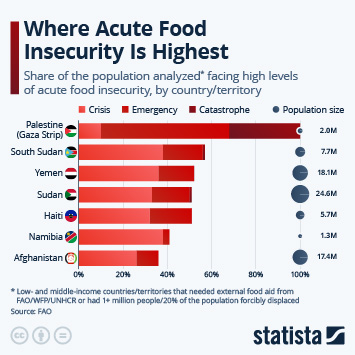
The number of people facing catastrophic levels of acute food insecurity rose from around 155,000 in two countries in 2015 to 1.4 million people across six countries in 2025, according to the FAO’s 2026 Global Report on Food Crises. Last year, the three main drivers of acute food insecurity were conflict and insecurity, economic shocks and climate extremes. While these phenomenon are interconnected, an assessment of the state of global food insecurity in 2025 found that the primary driver in 19 of the 47 countries and territories analyzed was conflict.
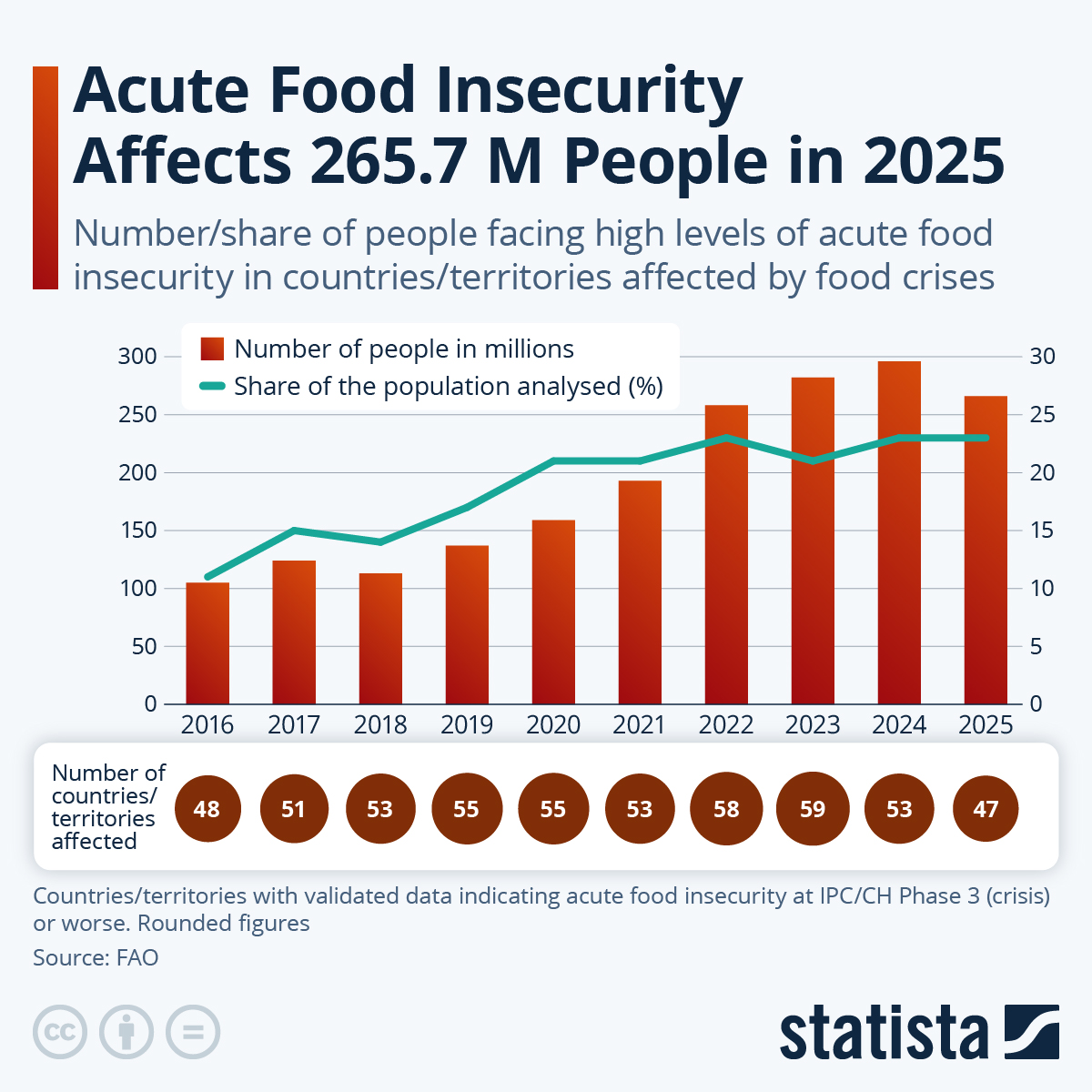
As the following chart shows, the share of the analyzed population facing high levels of acute food insecurity nearly doubled in the past decade. Between 2016 and 2025, the total number of people facing high levels of acute food insecurity rose from 105.3 million to 265.7 million. This increase reflects both worsening food security and increases in country and population coverage.
Between 2019 and 2020, the major increases in the number of people facing high levels of acute food insecurity were driven largely by socioeconomic impacts of the Covid-19 pandemic and the outbreak of war in Ukraine, which impacted commodity prices. Then over the next few years, between 2022 and 2024, the increase was partly due to expanded analysis coverage. Meanwhile, deteriorations in conflict-driven crises such as in Myanmar, Nigeria, Palestine and Sudan, outweighed improvements in Afghanistan, Kenya and Ukraine.